Opening Hours


A thundering waterfall is one of nature’s most beautiful sights, but at many of the world’s most famous cascades, the view only comes after hours of steep hiking and unpredictable weather. And for travellers living with medical conditions which make physical activity that bit harder, this can shape which sights make it onto the itinerary.
The good news? From roadside viewpoints to gentle rainforest trails, plenty of the world’s best waterfalls are far easier to reach than you’d think. To find out which, we ranked 129 waterfalls on distance from the nearest airport, elevation gain, altitude and weather, from the easiest to visit to the ones you’ll really have to work for.
The world’s top 20 easiest waterfalls to visit
| Rank | Waterfall | Country | Distance from Nearest Airport (km) | Trail Distance (km) | Elevation Gain (m) | Max Elevation (m) | Average Annual Temperature (°C) | Average Annual Humidity (%) | Average Annual Wind Speed (mph) | Average Monthly Precipitation (mm) | Difficulty Score (/100) |
|---|---|---|---|---|---|---|---|---|---|---|---|
| 1 | Rainbow Falls | United States | 10.6 | 0.2 | 1 | 121 | 25 | 66 | 26 | 59.6 | 18.4 |
| 2 | Snoqualmie Falls | United States | 38.6 | 0.6 | 13 | 57 | 12 | 72 | 9 | 65.3 | 22.9 |
| 3 | Kravica Waterfall | Bosnia and Herzegovina | 40.7 | 1.1 | 49 | 82 | 16 | 62 | 10 | 82.8 | 25.1 |
| 4 | Iguazú Falls (Argentina side) | Argentina | 10.9 | 2.4 | 47 | 194 | 23 | 70 | 11 | 155.2 | 25.6 |
| 5 | Cohoes Falls | United States | 14.2 | 0.8 | 31 | 49 | 9 | 68 | 12 | 85.7 | 26.2 |
| 6 | Augrabies Falls | South Africa | 120.7 | 1.9 | 36 | 619 | 22 | 35 | 14 | 20.1 | 27.1 |
| =7 | Bridalveil Fall | United States | 145.5 | 0.6 | 16 | 1223 | 17 | 56 | 11 | 26.7 | 28.7 |
| =7 | Mulafossur | Faroe Islands | 10.9 | 1.0 | 36 | 71 | 7 | 85 | 25 | 67.0 | 28.7 |
| 9 | Shoshone Falls | United States | 20.4 | 1.1 | 46 | 1066 | 10 | 55 | 15 | 21.6 | 28.8 |
| =10 | Khone Phapheng Falls | Laos | 155.0 | 0.3 | 5 | 77 | 28 | 70 | 6 | 175.0 | 30.0 |
| =10 | Twin Falls | Canada | 27.0 | 1.1 | 56 | 153 | 11 | 80 | 15 | 96.4 | 30.0 |
| 12 | Yosemite Falls (Lower) | United States | 153.7 | 1.9 | 18 | 1230 | 17 | 56 | 11 | 26.7 | 30.1 |
| 13 | High Force | England | 74.8 | 1.4 | 30 | 336 | 10 | 78 | 20 | 36.8 | 30.5 |
| 14 | Aysgarth Falls | England | 76.1 | 1.4 | 35 | 203 | 10 | 81 | 17 | 54.5 | 30.9 |
| =15 | Rogie Falls | Scotland | 44.3 | 1.1 | 50 | 104 | 8 | 80 | 17 | 47.0 | 31.3 |
| =15 | Latak Waterfall | Malaysia | 30.9 | 2.1 | 67 | 106 | 27 | 85 | 8 | 227.4 | 31.3 |
| 17 | Nachi Falls | Japan | 90.3 | 1.8 | 68 | 265 | 17 | 61 | 17 | 132.5 | 31.8 |
| 18 | La Fortuna Waterfall | Costa Rica | 114.3 | 0.8 | 25 | 525 | 24 | 68 | 20 | 188.5 | 32.0 |
| 19 | Shannon Falls | Canada | 82.9 | 1.0 | 40 | 82 | 10 | 83 | 6 | 193.2 | 32.1 |
| 20 | Niagara Falls | United States/Canada | 19.3 | 3.9 | 59 | 169 | 9 | 72 | 17 | 71.1 | 32.5 |
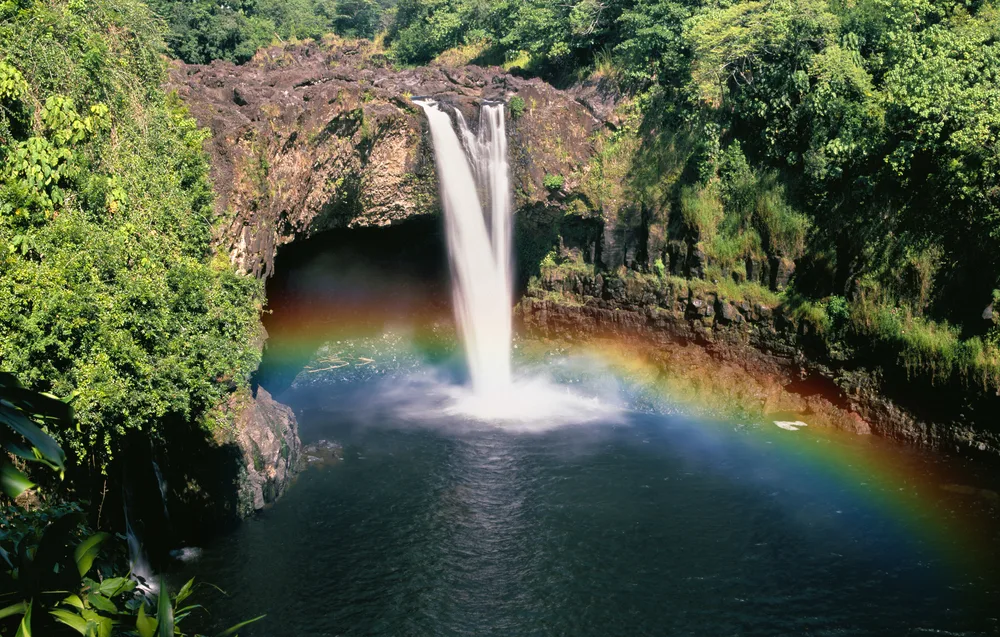
1. Rainbow Falls, United States
Difficulty Score: 18.4/100
Located in the Wailuku River State Park, Rainbow Falls is a 24-metre (80ft) waterfall famous for rainbows that are usually visible in the mist of sunnier mornings. Not only is the walk to the waterfall the shortest in the study (0.2km), but it’s also just a short drive from Hilo International Airport. While the walk is quick, visitors are advised to wear sturdy shoes as the mist can make the path slippery, and the best times to see the rainbows are on sunny mornings, typically around 10am.
2. Snoqualmie Falls, United States
Difficulty Score: 22.9/100
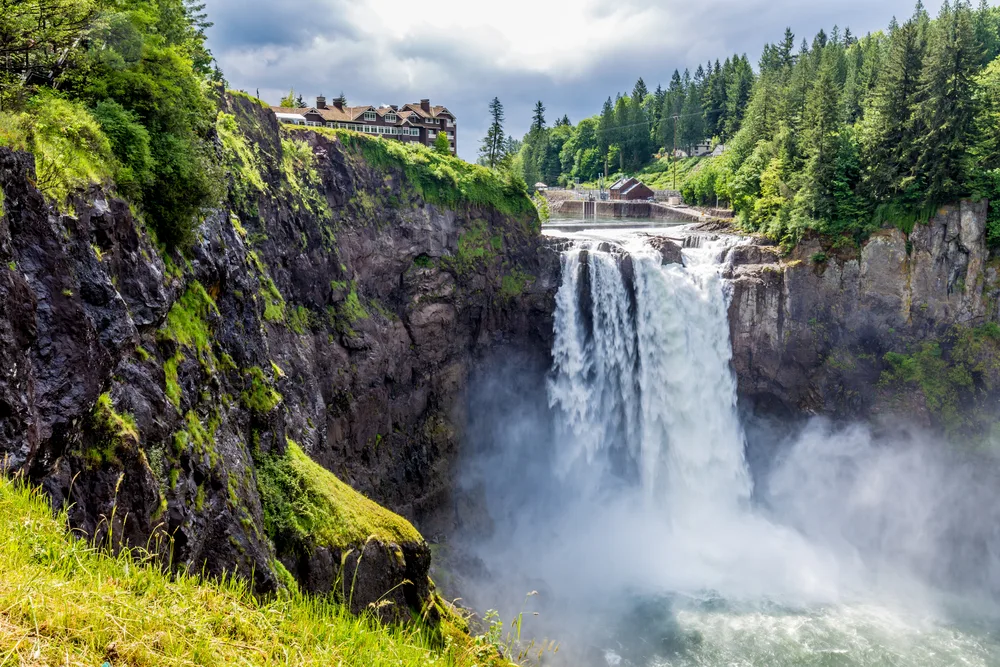
Standing 82 metres (268ft) tall in Washington state, Snoqualmie Falls is even taller than Niagara Falls and attracts more than 1.5 million visitors each year. The falls are considered sacred by the Snoqualmie Indian Tribe, who have owned them since 2019 and say the rising mist carries prayers to the Creator. To avoid the climb back up the stairs at the end, be sure to park at the Lower Falls parking lot to reach the spectacular, head-on view of the waterfall from river level.
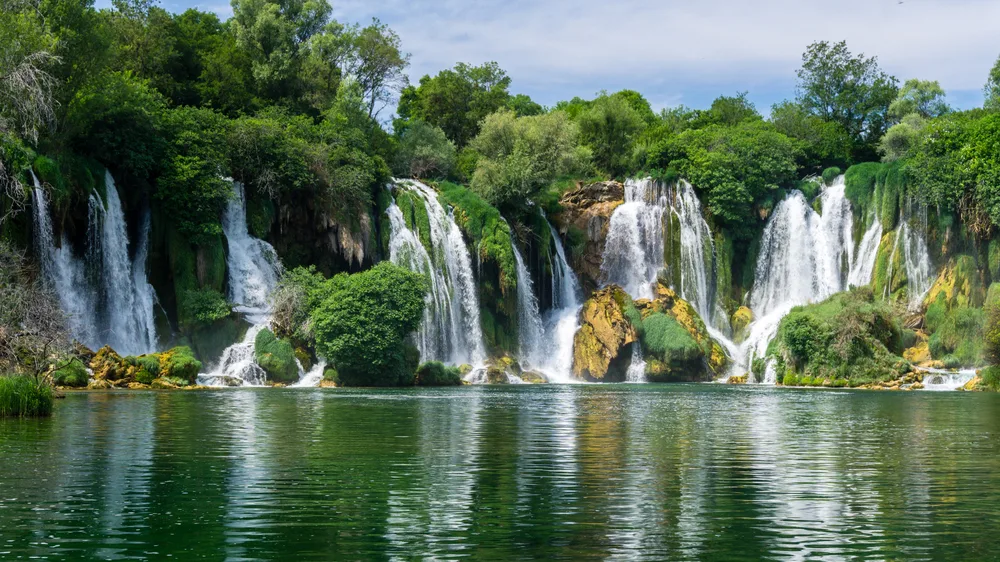
3. Kravica Waterfall, Bosnia and Herzegovina
Difficulty Score: 25.1/100
In third place, and the highest-ranking European waterfall, is Kravica Waterfall in Bosnia and Herzegovina. The falls stand 28 metres tall and drop into an emerald-green lake that offers a breathtaking spot to swim in summer. Admission costs around 10 euros (£8.50) per person during peak season, and food and drink facilities are available for those looking to spend the day exploring the surrounding area.
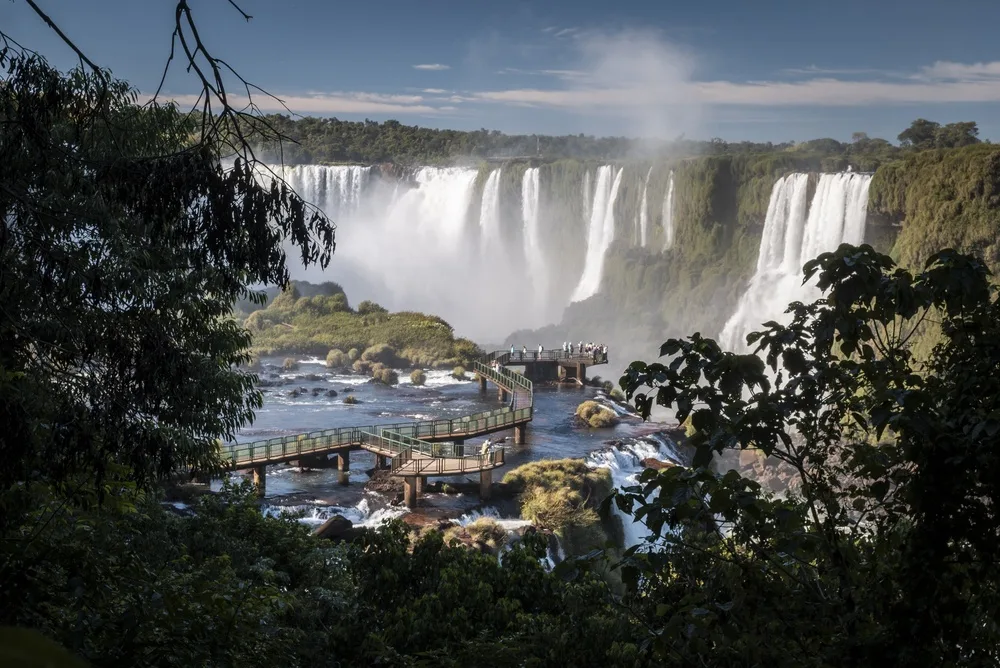
4. Iguazú Falls, Argentina
Difficulty Score: 25.6/100
Iguazú is one of the largest waterfall systems on Earth, with 275 individual drops and a total span of nearly 2.7 kilometres. The native Guarani word Yguasu literally translates to “big water”, and the falls span two countries: around 80% sit on the Argentinian side and 20% on the Brazilian side. The Upper Circuit on the Argentinian side offers incredible panoramic views of the falls and the river, and is made up entirely of elevated metal platforms, with plenty of spots to rest along the way while seeing as many of the falls as you can.
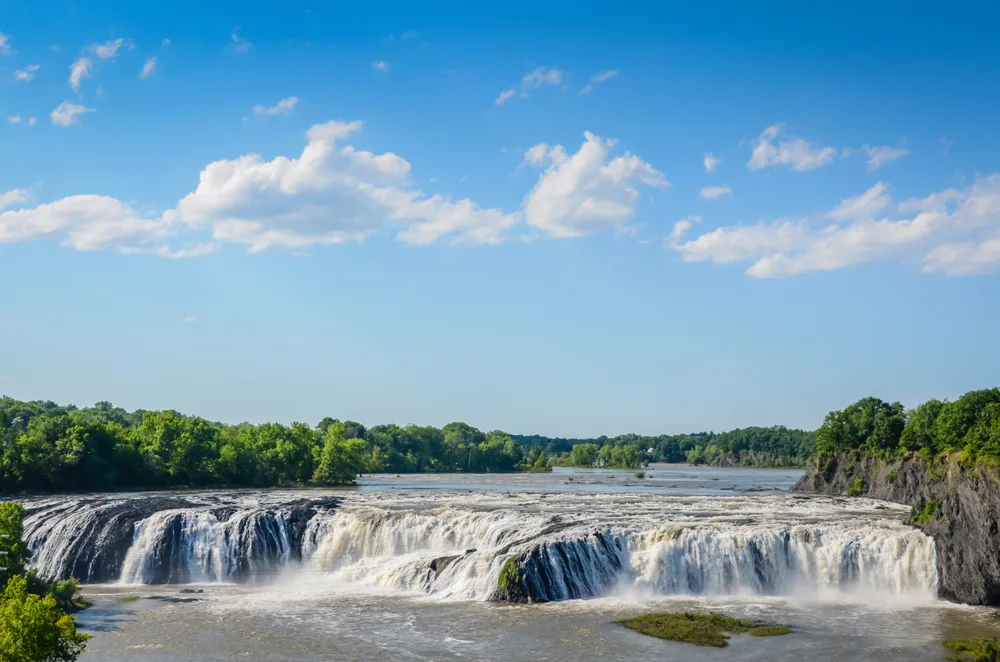
5. Cohoes Falls, United States
Difficulty Score: 26.2/100
Completing the top five is Cohoes Falls, located on the Mohawk River in New York State and a 14km drive from the nearest airport. The trail to the waterfall is short, at just under a kilometre, and it has an elevation gain of just 31 metres. Spring brings peak water levels as warmer weather melts the snow, while winter also offers spectacular views, particularly in freezing temperatures when the falls sometimes partially or completely freeze over. Check flow levels before visiting, as it is regulated for hydroelectric power, meaning water can run low or dry in summer.
At the other end of the scale, these falls demand serious grit to reach and see in their full glory.
The world’s top 20 hardest waterfalls to visit
| Rank | Waterfall | Country | Distance from Nearest Airport (km) | Trail Distance (km) | Elevation Gain (m) | Max Elevation (m) | Average Annual Temperature (°C) | Average Annual Humidity (%) | Average Annual Wind Speed (mph) | Average Monthly Precipitation (mm) | Difficulty Score (/100) |
|---|---|---|---|---|---|---|---|---|---|---|---|
| 1 | Emperor Falls | Canada | 292.9 | 13.0 | 882 | 1,678 | 5 | 68 | 11 | 40.2 | 82.9 |
| 2 | Króksfoss | Iceland | 155.1 | 20.0 | 874 | 649 | 6 | 83 | 36 | 102.7 | 80.4 |
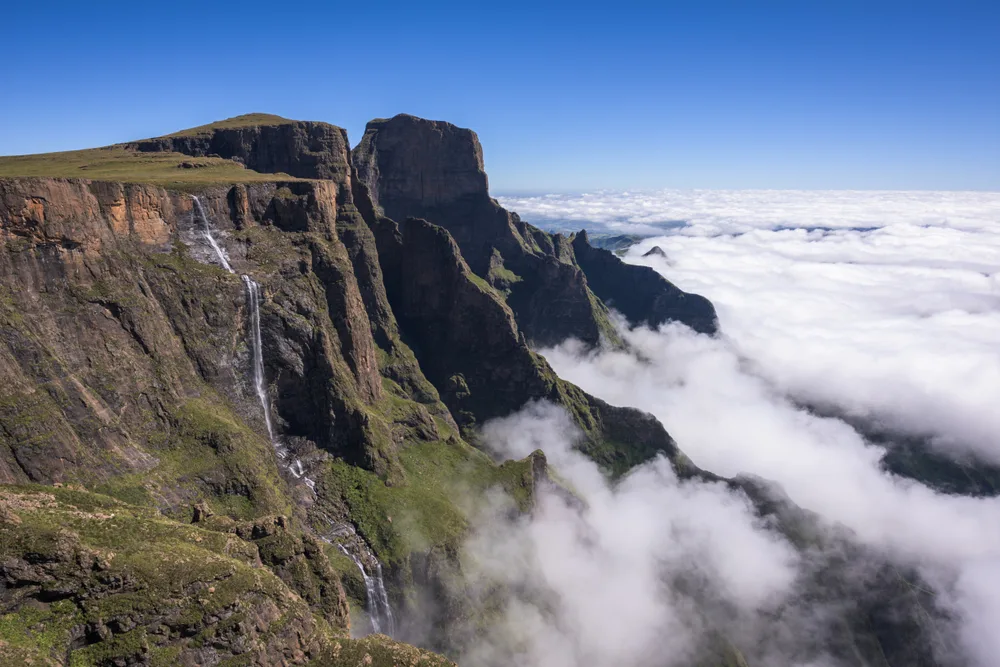
| 3 | Tugela Falls | South Africa | 329.9 | 13.0 | 712 | 3,095 | 16 | 55 | 12 | 58.8 | 78.3 |
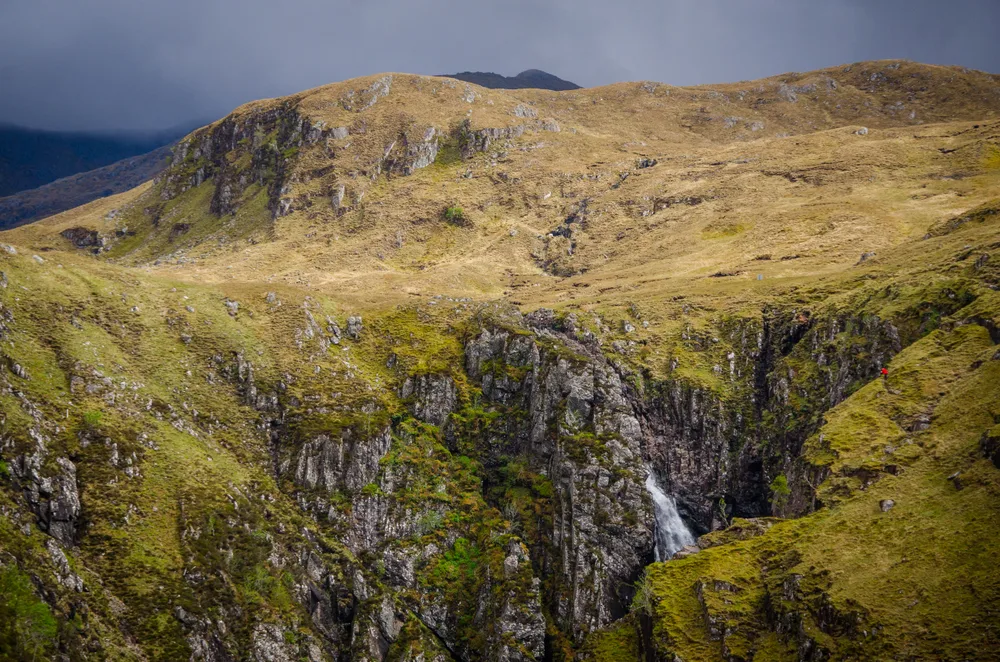
| 4 | Falls of Glomach | Scotland | 120.1 | 18.7 | 907 | 529 | 8 | 80 | 17 | 47.0 | 76.1 |
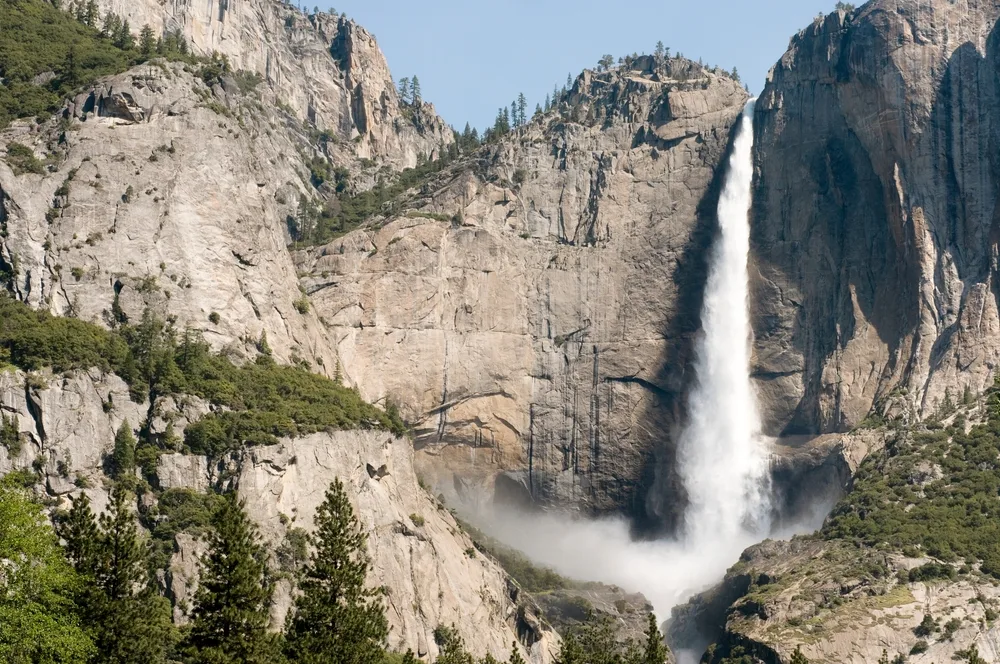
| 5 | Upper Yosemite Fall | United States | 177.0 | 10.8 | 987 | 2,043 | 17 | 56 | 11 | 26.7 | 73.1 |
| =6 | Vettisfossen | Norway | 62.1 | 13.7 | 781 | 343 | 5 | 71 | 10 | 41.8 | 69.6 |
| =6 | Cascade d’Ars | France | 129.9 | 10.6 | 693 | 1,408 | 13 | 75 | 8 | 83.7 | 69.6 |
| 8 | Dudhsagar Falls | India | 63.6 | 20.6 | 600 | 310 | 28 | 79 | 6 | 205.4 | 67.3 |
| 9 | Nevada Fall | United States | 156.7 | 9.5 | 648 | 1,823 | 17 | 56 | 11 | 26.7 | 66.5 |
| 10 | Eas a’ Chual Aluinn | Scotland | 139.2 | 10.1 | 487 | 469 | 8 | 80 | 17 | 47.0 | 65.9 |
| 11 | Krimml Waterfalls | Austria | 118.0 | 8.5 | 455 | 1,473 | 7 | 76 | 12 | 104.2 | 65.7 |
| 12 | Grande Cascade de Gavarnie | France | 63.1 | 10.5 | 611 | 1,831 | 13 | 78 | 11 | 85.7 | 65.6 |
| 13 | Langfoss | Norway | 153.7 | 5.0 | 616 | 621 | 5 | 71 | 10 | 41.8 | 65.3 |
| 14 | Feather Falls | United States | 146.1 | 14.0 | 544 | 760 | 17 | 57 | 10 | 55.3 | 64.5 |
| =15 | Catarata de Gocta (Gocta Waterfall) | Peru | 47.3 | 11.3 | 586 | 2,236 | 20 | 82 | 18 | 28.1 | 63.3 |
| =15 | Turlifossen | Norway | 173.8 | 9.0 | 399 | 301 | 5 | 71 | 10 | 41.8 | 63.3 |
| 17 | Cascate del Rutor | Italy | 123.9 | 6.8 | 462 | 2,015 | 12 | 75 | 10 | 95.0 | 63.1 |
| 18 | Cola de Caballo | Spain | 169.0 | 7.6 | 468 | 1,637 | 15 | 61 | 15 | 33.6 | 62.2 |
| 19 | Glymur | Iceland | 113.5 | 7.2 | 429 | 359 | 5 | 77 | 21 | 84.8 | 62.1 |
| 20 | Kunchikal Falls | India | 128.7 | 10.9 | 315 | 614 | 28 | 77 | 10 | 287.2 | 61.3 |
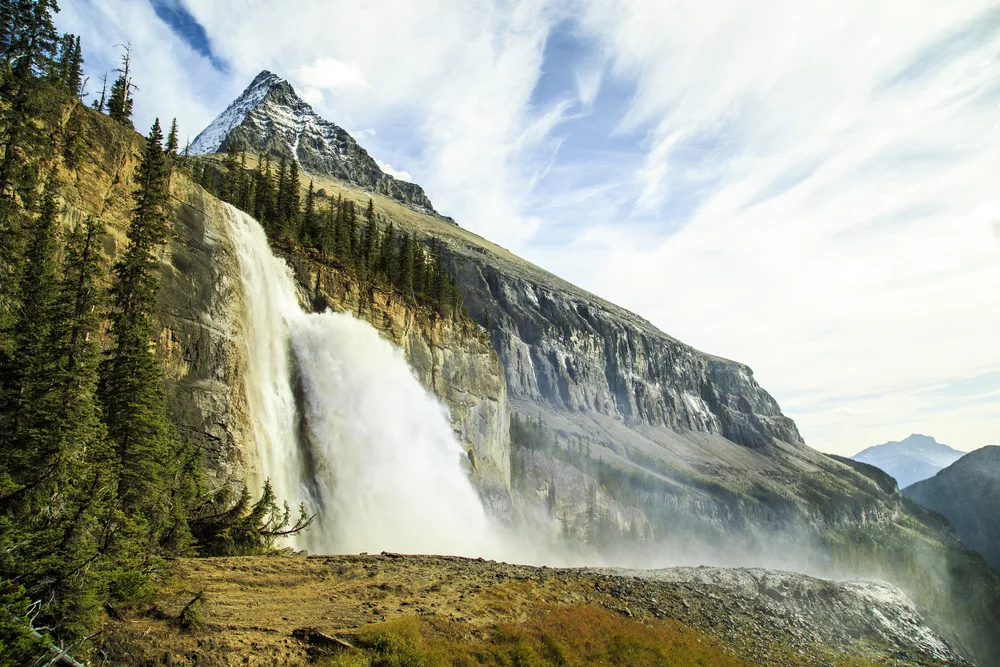
1. Emperor Falls, Canada
Difficulty Score: 82.9/100
The structure of Emperor Falls is unusual, with a protruding rock ledge roughly halfway down causing the river to violently explode outward in a massive arc known as a “roostertail”. With the trail reaching 1,678 metres above sea level in the shadow of Mount Robson, the highest peak in the Canadian Rockies, Emperor Falls is a 13km hike from the trailhead.
2. Króksfoss, Iceland
Difficulty Score: 80.4/100
Tucked into the Icelandic Highlands along the Skógá River, Króksfoss sits upstream of the world-famous Skógafoss on the Fimmvörðuháls trekking route. It drops into a narrow canyon, so you’ll usually spot its thundering mist cloud before you see the falls themselves, and it can only be reached on foot after scaling 400+ steps.
3. Tugela Falls, South Africa
Difficulty Score: 78.3/100
Tugela Falls is widely considered the world’s second-tallest waterfall (behind Angel Falls in Venezuela), dropping over 948 metres in total. The falls themselves are located in the Royal Natal National Park within the Drakensberg (Dragon Mountains) in South Africa, and the name comes from the isiZulu word thukela, which translates to “sudden”.
4. Falls of Glomach, Scotland
Difficulty Score: 76.1/100
The Falls of Glomach is one of the highest single-drop waterfalls in Britain, with a name hailing from the Scottish Gaelic word Glòmach, meaning “hazy” or “gloomy”. Reaching it requires real grit, because there are no roads or visitor centres nearby, meaning travellers wanting to see the falls must hike more than 18km to do so.
5. Upper Yosemite Fall, United States
Difficulty Score: 73.1/100
Upper Yosemite Fall drops a staggering 436 metres in total, making it one of the tallest individual drops in North America. The falls themselves are fed primarily by melting snow, so the stream often dries up by late summer or autumn, and in winter a massive cone of ice can even form at the base of the upper fall. The gruelling trail to the top features dozens of switchbacks and was built in the 1800s.
If our research has inspired you to build a trip around chasing waterfalls, but you’re living with medical conditions that affect your choice of trip, be sure to arrange comprehensive Travel Insurance for medical conditions to protect you should the unexpected happen.
Methodology
We selected a list of 129 of the world’s best-known waterfalls, before evaluating each one using the following weighted criteria:
- Distance from the nearest airport (15%)
- Trail distance (25%)
- Elevation gain along the trail (20%)
- The overall gradient (10%) (elevation gain relative to trail distance)
- Maximum elevation reached (10%)
- Annual mean temperature (8%)
- Humidity (4%)
- Wind speed (4%)
- Precipitation (4%)
Climate data is based on the nearest available weather station, so conditions at the falls themselves may vary.
Each factor was scored and weighted, then combined to create a final Difficulty Score out of 100. The higher the score, the harder the waterfall is to visit.
Data correct as of October 2026.